Blog Archive

10 January 2020

Poem: Ancient Wounds

Protected Pangolin: Art by Debora Ewing https://www.debnation.com


Careless shift carapace rifts
A sacred space exposed
Plates of armour torn asunder
Exposing the never whole

Curling 'round her pangolin heart
She tends to these intrusions
In seclusion she seeks inclusion
Within a tribe she cannot know

Warrior head high in a toxic sky
Sucking sulphurous bile from her throat
She ascends from the ashes
Writing footprints of grief in the sand

20 November 2019

Poem: Octopedal Intellect


Artwork by Alexander Harvey @ShadyComet (used by permission)


tock tock ticking
round your clock
hand in hand
we writhe
tentacled
bespectacled
one eye open wide
find me
feed me
open heart three
prise to find
inside
technicolour skin
you swim
through oceans
befouled with pride
can we tap
octopedal intellect
breaking brilliance free
before the final
midnight stroke
from grottos where
you hide

04 November 2019

Poem: Tendrils of Entanglement


worn wood warm
tentative tendrils
search soul ward for
sustenance and 
salvation
while whittled
paperbark parchment
pulses possibilities 
ringing round 
singing sound
smiling sun ward
finding firmament
fallow flee
retreating resting
retired to reality

blossom bloomed
blackened blighted
bending breaking
into bracken
no longer needed
however humus 
feeds all seeds
for survival


11 September 2019

Review: The Rosie Result


“Thank you! Thank you!! Thank you!!!” was the refrain beating in my head as I read the final tear-stained chapters of the Rosie Result. I didn’t expect Graeme could possibly top the first two Rosie books for engagement, humour, poignancy, and service to the autistic community, but he hit a grand slam with the conclusion of this series. I feel the world is a better place for these books. 

I loved the themes of deep friendship, moving from strength to strengths, and slaying negative autism stereotypes that ran through the Rosie Result. This book puts it to the NT world to think about their expectations for autists to adapt and modify themselves, often at great personal cost, with little to no consideration of what small, simple changes they could make to accommodate us.

If a bar like The Library ever actually opened in Melbourne, I would happily head there for a drink and to meet likeminded people. Finding our tribe is so essential to the health and wellbeing of every human, but the many barriers for autists mean we're often unable to do so. Spaces designed especially to cater to our needs could open all kinds of possibilities, by facilitating comfortable, safe community interactions that honour our sensory and social needs. It might be a pipe dream, but the fantasy is heartening in itself.

I related deeply to the parent-child parallel diagnosis storyline, as will many late-diagnosed autists. The Rosie Result treats this with great sincerity and heart, exploring the fears, pitfalls, anxieties, and pressures (both internal and external) that accompany exploring formal diagnosis and accepting a new identity. I love how this is woven into the fabric of the story and informs all that occurs within it. Graeme doesn’t pull any punches on the difficulties of shifting our identity paradigm after a lifetime of conditioning and brilliantly captures the relief of finally coming home in ourselves. 


It’s been a wonderful ride through the Rosie series and I can’t wait to see what Graeme whips up next in his Standardised Meal Plan Cookbook! 

26 July 2019

Never Walk Alone


The hardest thing about depression is the overpowering sense of isolation it imposes. It's crushing and creates its own feedback loop, convincing you that no one can understand or bear the brunt of its force. When someone is on the slippery slope into depression or desperation, the best antidote is not to attempt to cheer them up, but to convince them that they are resolutely not alone. That they are seen, not judged, heard, not spoken at, and that you are walking beside them them no matter what.

After too many battles with deep and debilitating depression and a few close calls, I now have what I fondly think of as my "break glass in case of emergency" friend. A friend with whom I've made a standing pact to call any time I start to have intrusive thoughts or I can't see my way through my current situation. It's a reciprocal relationship, I've made the same commitment to her. I know that if I call, she will drop whatever she's doing (within reason, of course) and ride it out. This is the greatest gift anyone has ever given me.

I know we don't all have this. I certainly didn't until I was nearly 40 and ended up in a psych ward with a 4-month old baby. I wouldn't have made this deal with my guardian angel had she not insisted upon it because she loves me so much. But I implore anyone struggling with their mental health to look for that person when you come up for air. If you're in the midst of a crisis, don't beat yourself up because you weren't prepared, but when you are vomited out on the other side and have a chance to catch your breath, make it a priority. Find that person in your life whom you deeply trust and tell them what you need, ask them to promise they'll be there no matter what, and make the promise in return so you have the honour of being that critical person for someone else.

If your mental health is great (whoot!), look around for someone in your life you love to the end of the earth who might not be on such solid footing. Tell them that you've got their back no matter what. Tell them to put you on speed dial. Tell them that you'll kick their ass if they're ever in a terrifying black place and they don't call you. It may, quite possibly, save their life.

Here's my poem on this theme:

Break Glass in Case of Emergency 

Have you ever been alone?
I’m with you
No one calling on the phone?
I’m with you
No one playing in the park
I’m with you
No one holding in the dark
I’m with you

No one ringing in the year
I feel you
Never offering their cheer
I feel you
No one making any plans
I feel you
Ever offering their hands
I feel you

Have you ever been afraid
I see you
Of the plans that you have made
I see you
Wishing you could go there brave
I see you
So those friendships you could save
I see you

Softly calling to the night
I hear you
Your darkest thoughts the terror fright
I hear you
Ever clinging for the dawn
I hear you
Hoping you were simply wrong
I hear you

That the games you’ll learn to play
I get you
And the perfect words to say
I get you
To the eyes that you behold
I get you
With their secrets never told
I get you

Come clear as you can see
I know you
You were never meant to be
I know you
The same as all the rest
I know you
In your head or in your chest
I know you

You are you as I am me
I am you
This mumbled way to be
I am you
But you never walk alone
I am you
When you have me in your phone 

24 July 2019

Review: The Rosie Effect


I've just devoured Graeme Simsion's second novel, The Rosie Effect, and I'm already hungry for the third part of the trilogy. I set out to read this quickly, as I was approximately one third of the way into Toni Morrison's Paradise when it came into the library for me and I didn't want to lose the thread of her masterpiece yet again, but I did not anticipate consuming it within 24 hours. Yes, I did other things, work, kids, household, in that time, but every spare second, and a few I probably shouldn't have spared, were spent completely engrossed in the continuing tale of Don Tillman. Simsion's writing is fast and fluid, and I find Don so relatable I don't need to ponder his thoughts or actions. Hence, whipping through the first two books in this series.

The new dimension of a baby on the way drew me even deeper into this book than The Rosie Project. The scrutiny of Don's suitability as father material raised some painful questions for me and caused me to reflect on my own journey into motherhood. Clearly, as a woman, I had the double-sided experience of being in Rosie's shoes as well, so reading this book provided an opportunity to explore two distinct forces within my own mind.

When I became pregnant with my first child, I had no idea I was autistic. I'd thought about it in passing as increasing numbers of friends posted things about it on social media, but the Ran Man stereotype was solidly cemented into my brain (just as in Don's), so I shrugged it off. While the female presentation of ASD was only just being codified by the DSM-5 around the time I was growing a baby, I apparently had enough "tells" to be picked out by some professionals. No one, however, had the decency to mention it to me.

The distain Don encounters from the social worker, Lydia, recalled an experience I had during my first antenatal appointment. I went blindly to see a random doctor, who I expected would instruct me on what I should/shouldn't do, as I was unaware of any of the protocols or procedures surrounding pregnancy at the time. Although I had become pregnant precisely when I intended to (four months after going off the pill, and a month after giving up coffee and alcohol, I deemed the safest minimum time at which to "pull the keeper"), was an appropriate age (34), finished with my PhD, gainfully employed on my second 3-year contract at a prestigious university, and married, I got the distinct feeling that the first doctor I saw thought I was tremendously unsuited for the task. I attempted to get the requisite information from her, but left angry and insulted after being spoken to like a child for half an hour. I took the pile of pamphlets home and ingested their guidance and recommendations along with half a round of unpasteurised sheep cheese, which I promptly put away when I read the warnings about listeria.

I can visualise that doctor's visit and the follow-up with painful clarity. I can hear her rising tone of irritation as I resolutely refused to have the amniotic fluid tested for markers of Down Syndrome, as my husband and I had weighed the risks of the procedure and were unprepared to terminate the birth on such grounds. I sensed she was angry with me about something else, but I had no idea what. I was healthy, fit, educating myself as rapidly as possible about all things pregnancy and baby related, committed to breast feeding, and making informed choices, what could she possibly be aggrieved of? 

It took seven years and this book for the penny to drop. If I were a betting person, I would put money on her judging me unfit because she saw my lack of eye contact, endlessly fidgeting and fluttering hands, "professorial" tone, sewed it up in one dismissive package and hoped I wouldn't bring "another one" into the world. It's certainly possible that I'm giving her more credit and a colder heart than she's due. Maybe she was just overworked and tired. Maybe she thought I was lying about my diet, exercise, non-use of drugs and alcohol, etc. because I couldn't look her in the eye when asked. Who knows? But the way she talked to me, like I was a child or an imbecile, rather than someone with exceptional brain power, makes it hard to draw a different conclusion.

I've heard many other autistics repeat this same refrain. The moment someone, particularly a (mental) health professional, either discovers our diagnosis or surmises it for themselves, we're summarily dismissed as too daft to understand what they're saying. Either that, or they dismiss the diagnosis, because we're clearly too "high functioning" to be autistic. A nasty Catch-22.

The Rosie Effect does great things to dispel so many of the myths surrounding autism. Don loves deeply, is a stalwart friend, is trusting and patient to a fault. The lengths he goes to in his attempts to protect, assist, and prop up the people around him are laudable. I was moved to waves of tears as his friends and family gave their heart-felt accounting of all he'd done for them. These are the stories of autists we need to tell.

This wouldn't be an honest review if I didn't include the things about this book that chafed. No great criticisms, but things that made me pause and suspend my belief. I find Don's best friend, Gene, continues to be far too two-dimensional. I recognise that this is normal through Don's lens, but even Gene's words and actions don't belie a full human rendering in this book. I keep waiting for him to be more completely revealed around every corner then feel disappointed when he's not.

I will also add one editorial comment. No American medical student would use the term "muso". That is an unabashedly Australian term, which had me scanning back through the pages to see if there was any indication that the study group contained other Aussies. It was also odd that Don used the term "crib" instead of "cot", even when speaking to his father, but I can see why the former would be selected for international audiences to avoid confusion.

Finally, I gave this an unreserved 5 stars on Goodreads and highly recommend it to anyone looking for a touching, fast-paced, insightful read.

Spilt Milk

"Nothing can prepare you for motherhood." That's probably the truest statement I've ever heard. I was so beyond unprepared on so many levels that nearly seven years in, I still find myself reeling. I love my children, but I am still in mourning for so many things wiped away by their entrance to this world, my body and mind not least among these. Here's a little Twitterpation (my new label for verses set down first on social media) on these laments.


Oh, baby
You’ve hurt me so
Most people will never know
The hidden scars
That run so deep
The years of nights
Without sleep
You slumber and play
Ignorant bliss
I hold back tears
Your brow to kiss

The middle soft
The endings hard
My restless soul
This mind you charred
A wicked tear
The loss of hair
Unburdened mind
You never care
What you wreaked
On this poor vessel
Resentful thoughts
I fight to wrestle
To the ground
It’s not your fault
You never sought

To be born 

22 July 2019

Please, don't kill the cat.


Nearly a year ago, as my bewildered husband and I wrestled with the beginning stages of the ASD diagnosis process for our eldest daughter and me, we attended a workshop on "Managing Challenging Behaviours" at the behest of his mother. We didn't know what to expect. I was extremely on edge as the only clearly ND parent in the room, feeling like they were coming to get me. Some of what was said was helpful, some felt like a personal affront. I occasionally wanted to scream, "this is too hard!!" and flee the room, but instead, I sat and rocked and wrung my hands together trying to block out the agonising feelings bombarding me from everyone else in the room.

As tough as it was, there were a few pearls of wisdom we took away from that night that proved useful for better understanding our daughter's often bewildering experience of the world. Foremost in my mind, was the notion that curiosity, not compliance or "acceptable"/"normal" behaviour, is the opposite end of the spectrum from anxiety, a state we frequently inhabit in our household. The ASD researcher/speaker encouraged us to watch for curiosity to know when our anxious little creatures were genuinely relaxed so we could capitalise on those moments for understanding how to get them there more often.

I tucked all this under my cap and set to my task of trying to unravel the mystery of my daughter's persistent anxiety without thinking twice about how it applied to me. I recognised that S and I were feeding off one another like a pack of dementors at ground zero, but I couldn't see through the smoke and flames to an exit strategy. I funnelled all my energy into getting her in to see the paediatrician, the child psychologist, the occupational therapist, the speech pathologist, running in circles to get the professional safety net we needed to make necessary changes. What I failed to see, was how much I needed that energy to soothe my own anxiety for both our benefit.


I needed help to get help. It's such a conundrum. It's a juggernaut confounded by my own struggle to seek help, which gets progressively worse the more anxious I am.

Yet, now that the smoke is starting to clear, the sound of reinforcements approaching, I suddenly recognise my own curiosity returning. I find myself able, for the first time in decades, to seek out new ideas and ways of thinking, sit with my thoughts without them mowing me over, weave new threads together into an interesting tapestry of creativity. It's refreshing and, dare I say, fun.

I must give credit where it's due for jolting me out of my mental whirlpool and reminding me I have the ability to write my way through the gripping anxiety, down the slope of ebbing strain, an into fields of frivolity. The Twitter #WritingCommunity has given me this. Motivation to write more better, different voices resonating, creating connections with others sharing similar struggles around the globe, is helping me pause, breathe, think, reflect, write, and find my curiosity again.

Thank you!


Disjointed Heart

I really struggle with the disconnect between how I feel, how I think I feel, and how I think I should feel. This is especially true for nebulous feelings of affection and love, which I'm beginning to realise I experience quite differently than the average bear. 

People often ask me how I can stand to be away from my children and husband so much, but the truth is, it doesn't really bother me. When I'm away, my thoughts aren't with them; there's no pining, no longing, no wishing I were home. When the question is put to me, I mumble awkwardly and try to shift the conversation to how much I love my work and the deep satisfaction it provides. I choke down the guilty feelings and try to scrub away the self-slapped labels of bad mother and bad wife.

The fact is, I sometimes forget all about dearly beloved friends and family for weeks or months, only to have a sudden pang of yearning for them hit me from out of nowhere. My mind can get so caught up in the fantasy worlds in my head or those on the printed page, the real world all but ceases to exist, and along with it, the flesh and blood people I should be loving. I would, more often than not, prefer to be left alone to deeply explore the worlds and relationships of my own design rather than try to navigate the treacherous waters of the ones I inhabit.

This whirlpool of thoughts coalesced into a few verses as I tried to will myself to sleep last night. I was suffocating as my husband's unspoken question, "did you miss me while I was gone?" sucked all the oxygen out of the room, so I sketched out my silent response. However, it's broader than just that one interaction, it can apply to many. Some about which I've written previously, others I haven't. I didn't think it was particularly good, but some writer friends thought differently. So I will preserve it here.


I SO LATE

You leave
But I don't miss you
Although I know I should
You leave 
But I don’t miss you
Although you wish I would

You leave 
But I don’t miss you
I breathe when you are gone
You leave 
But I don’t miss you
I fear you’ve cast me wrong

You leave 
But I don’t miss you
Always begging me to hold
You leave 
But I don’t miss you
Shadowed secrets never told

You leave 
But I don’t miss you
I know that I should try
You leave 
But I don’t miss you
After years I wonder why

You leave 
But I don’t miss you
It always ends this way
You leave 
But I don’t miss you

Now the only choice is stay 


Geoetry

It's been over 20 years since I last felt moved to write a poetic verse. I think it's a sign I'm finally slowing down enough to be curious and playful with my own thoughts and inner world. I hope you enjoy.

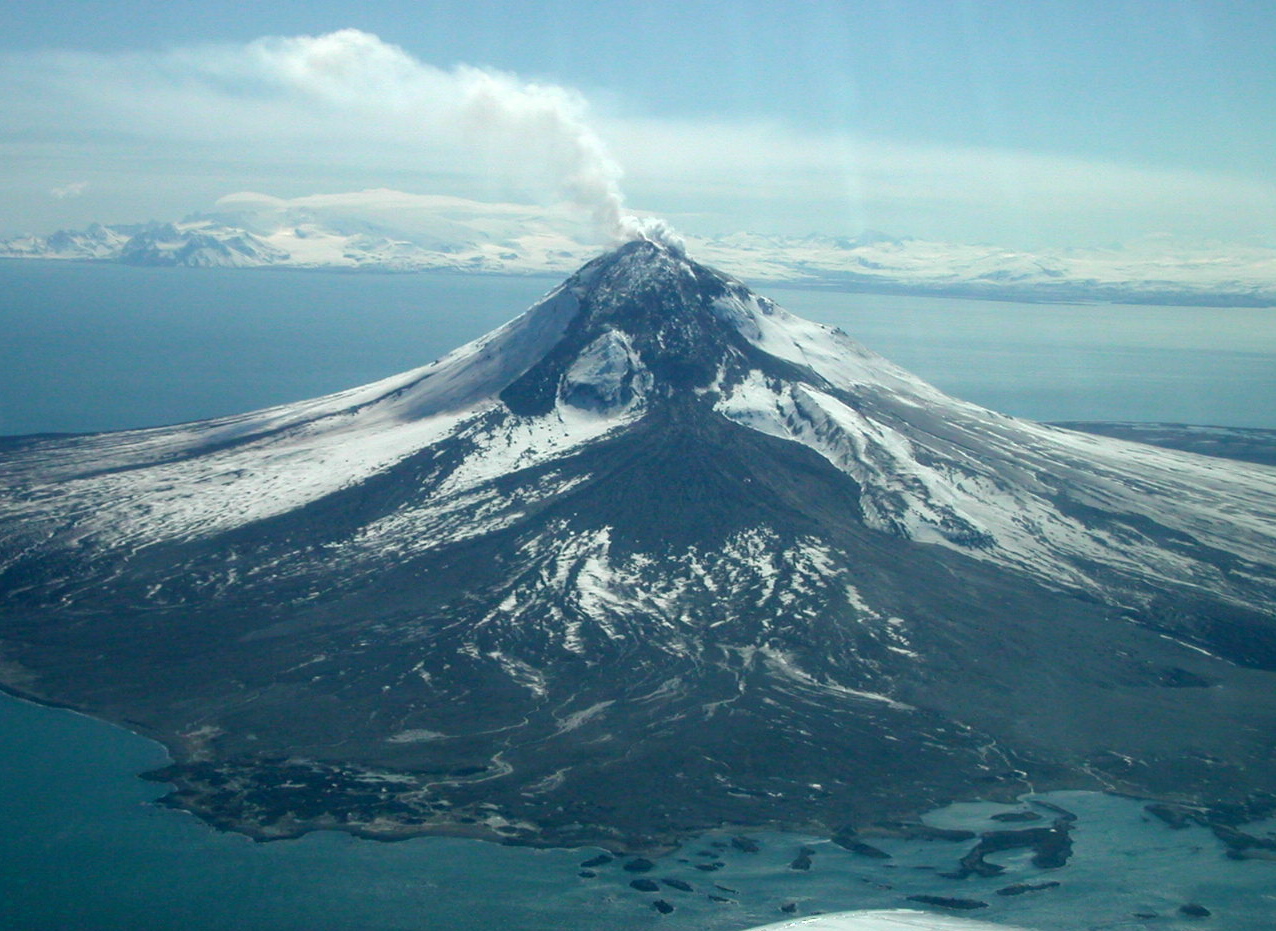
Mountains of Love

They'll cut you, they'll burn you
I have my scars indeed
But my heart is still intact
Left to beat, left to bleed

Never promised me answers
Never promised me thrills
Below fourteen hundred degrees
Their fine carapace chills

I've slept upon their shoulders
We've walked hand in hand
Far less than the mortals
Do they ever demand

They've kept me up too late
Woken with me to the sun
Where there's a slope there's a way
Lava ever will run

Own photo: Mt. St. Augustine, Cook Inlet, Alaska


*******************************************************


Heart-Quake

Solar plexus punch
Hold
On 
Tight
Love the waves
The world is churning
Stomach's hurling
The trees are madly swaying

I'm nearly losing lunch
Will
It
Cease?
Split the road
The building's flailing
Concrete's derailing
The stack of papers falling
To the floor

(Inspired by the #vss365 prompt #stack & the real life events of the November 3, 2002 M7.9 Denali earthquake)

30 June 2019

Mirrored Wound Magnetism


I've never studied psychology beyond a few breadth courses at university, but having spent more than my fair share of time in counselling with a variety of mental health professionals, I've swallowed a fair bit of psych speak over the years. One concept I find intriguing and able to explain a significant number of my own challenges is that of mirrored or twinned wounds. Essentially, in as far as I understand it, the concept is that we are drawn to those who share or mirror our own deepest emotional wounds. Clearly this is an over simplification as humans are far more complex than that and many of us carry a mixed bag of issues, but it certainly presents an interesting lens through which to examine patterns of dysfunctional relationships.

If time were sufficient investment to yield equivalent degrees, I would have a Ph.D. or two in dysfunctional relationships. Looking back through the years, I can point to exactly one romantic relationship that was based on a healthy friendship and mutual respect. Not surprisingly, we dissolved the intimate side of that relationship because it introduced too much complexity into a friendship we cherished too much to ruin. In other words, I was too damaged and he too healthy to bind us to one another. The upside is we're still friends 20 years on.

All other relationships were a mixed bag of short-term physical attractions between strangers that fizzled out nearly as quickly as they started and a few messes of rapid intertwining too complex to pick apart before it was too late. At 40, I have had exactly three long-term relationships (anything over a few months, by my own definition). The first was with a horribly manipulative individual who made it his unspoken mission to build me up for the express purpose of rigging me like a puppet fully under his control. After a few fun happy weeks, I was so tightly wound in his web I couldn't make a single independent decision, was incapacitated by fear of his rejection and wrath, and isolated myself from every friend and ally who might have saved me from him. A few months in, I made a split-second decision to drop out of the prestigious university to which I'd spent a lifetime busting my ass to gain entrance and generous scholarships in an effort to appease him and return into his favour. He was cruel and held sway over me for two years before I finally grew a spine and saw him for the petty manipulator he was.

This relationship was founded upon the most insidious and overt manipulation. I was too young, too naïve, too inexperienced and far too motivated to please to see the endless stream of red flags: he dictated not only with whom I could spend time, but also how much, where we could go and what we could do; he was not only uninterested in my pleasure in the bedroom, he forbid me from doing anything that might enhance my sexual experience because it was "an insult" to him; he determined my preferences in food, entertainment, activities, and experiences by praising me when I "chose correctly" and reprimanding when I did not. He once hid my passport the morning I was departing for a three-month study abroad program just to see how I would react. The "correct" reaction was to throw up my hands and say, 'oh well, I guess that means I just get to stay here with you! Yay!', rather than my severely "incorrect" reaction of freaking the fuck out that my entire trip/degree was going down the toilet because my passport had mysteriously disappeared. He then made himself the "hero" of the hour by "finding" said passport once I was in full crisis mode. I could write an entire book about all the horrifically fucked up things he did or said to me over those lost years, but I have no desire to waste any more of my life on him.

To say I walked out of that relationship with a twisted sense of who I was and what I was worth would be an understatement. I was completely lost. I nearly starved myself to death and jeopardised my chances of going on to grad school in the fall out, trying to regain the internal compass he'd so completely destroyed. I started this blog in the tumultuous aftermath of his destruction, an attempt to write my way through the quagmire.

I won't claim to have crawled out of that mess significantly wiser, but I was certainly more wary. I was suddenly self possessed enough to realise I was physically attractive to others (the glorious conclusion of ugly duckling syndrome), but I had no idea what it meant to be attractive on any other level. I lurched from one heady micro-affair to the next with zero awareness of what I was inflicting on others. I lost respect in my community of graduate students and built an army of enemies without the slightest inkling of what I was doing. I was labelled a "man eater" and derided both behind my back and to my face until finally I found someone who made me pause, someone with whom everything snapped into deep focus.

Four and a half years, most of those spent co-habitating, sharing all friends and co-workers, living completely in one another's pockets, was not a significantly healthier alternative to the previous nightmare. I was no longer being coerced into shedding my own identity through praise and censure, rather I was coached, for my own sake, how to behave in order to fit in. The instructions were no longer coming from a single individual, but rather the whole community around us, so I worked diligently to behave correctly, fit the mould, and firmly affix my mask. I became socially acceptable and expected this would yield happiness.


Instead I became increasingly anxious and unable to function without my partner's guiding hand. I still do not fully understand our particular dynamic, but after I extracted myself most gracelessly from our entanglement, a friend passed me a book that outlined the characteristics of an enabling relationship and I saw how directly our relationship reflected that of his parents. It then made sense why his pattern was to get into a relationship with a strong, beautiful, independent, intelligent woman and reduce her to a non-functioning, depressed shadow of her former self all the while wondering what the hell went wrong. He was literally creating the image of his mother he was trying so desperately to escape. He was not an unkind or manipulative person, in fact, he was quite the opposite. It seems that he went to such extents to try to be supportive and helpful out of the good in his heart that he inadvertently destroyed the other person's sense of autonomy and self.

There were many wonderful and positive things that happened in the course of this relationship, so it was far from a miserable experience, but there was one key moment that completely opened my eyes and changed the course of my search to better understand myself. In a heated argument over something now long lost to time and memory, he blared that he wasn't my father and to stop projecting my "daddy issues" onto him. My mind flashed an instantaneous non-thinking thought in response, "not my dad, you're the mother I want". It was such a surprising beam of insight into a deeply buried secret previously held within the complete darkness of my subconscious I was struck dumb and didn't even respond. I'm sure he thought he'd hit the nail on the head, however he'd instead turned the key in a lock I didn't know existed. 

I can understand the primary reasons leading him to presume my issues were grounded in my relationship with my father. First, pop psychology feeds us a steady diet of women's "daddy issues" and how these translate into dysfunctional relationships. Second, for as long as he'd known me, I'd been estranged from my father and rarely spoke about him. What he didn't know, was that up until the catastrophe that was the relationship described above and my snap decision to abandon my private university aspirations, my dad and I enjoyed a wonderful and very healthy father-daughter relationship. The rift between us was forged and carefully fostered by a prime manipulator who ultimately wedged herself between him and all others in his life so she could covertly embezzle all of his modest wealth. My 20-20 hindsight reveals the clear pattern between my father's and my propensity to fall prey to cunning charlatans.

But the notion that I was somehow desperately seeking for him to fill the mother-shaped hole in my heart made no sense on the surface. My mom and I were very close, more like friends than mother and daughter, a characterisation she worked diligently to foster. Yet that flash of insight sent me down a rabbit hole of deep self examination. Recurrent childhood nightmares, in which I struggled futilely to reach her and get her attention, rushed vividly back to me. I began recognising how much of my childhood was dedicated to meeting my mother's emotional needs, rather than the other way around, leaving me in a confusing wash of disillusionment that I have spent the better part of the past 16 years trying to make sense of.

Unfortunately, I still didn't possess the emotional-cognitive skills or capacity to sort it all out before that relationship imploded. I still had more lessons to learn and apparently needed a more ruthless teacher to cut through all the crap. I don't spout many maxims, but I think if you really want to examine your daemons, you need to get together with someone more fucked up than you. So, when I was ready to pack it in and accept a life-sentence of solitude, the universe sent me G-Force. I was actively avoiding entanglements to such an extent I rarely left my lab except to go home to sleep and take care of my cat. I won't go into the details of the ridiculous efforts G-Force made to get into a brutal and emotionally abusive "relationship" with me, but the one gem he left me with was the enlightening observation that I didn't believe I deserved to be loved.


My initial reaction to this outrageous statement was to call 'horse shit' on it, as with most everything that poured out of his brilliant but feral mouth, but I paused just long enough to realise the bastard was right. My entire life, as it related to others, was based on the premise that no one would ever actually love me because I was fundamentally unlovable. My constant striving to excel at everything, whether academic, athletic, or artistic, was a constant attempt to attain an undefinable state of "loveableness". My painfully misguided belief that I could achieve my way into the good graces of the world left me with a shining résumé and a patchwork heart.

While there was still much unravelling to do after this revelation, it at least gave me a legitimate starting point for deeply examining the conundrum. Sadly, there was no one on hand at that point to highlight the propensity to propel oneself toward those suffering from the same flavour of broken-ness. I tried to formulate a plan to avoid the pitfalls I'd identified in all previous relationships, but this fundamental flaw inside of myself was a bug in the code that needed another iteration before it could be identified.

The second counsellor my husband and I went to pointed out our shared or mirrored wounds, proffering this as an explanation for the constant pain we inadvertently inflicted upon one another in spite of (or perhaps due to) our overpowering love of one another. He brushed it off as psychobabble and insisted he'd done all his work and this all came down to my issues. But it takes two to tango and after a few more years of trying to fix one side of our see-saw, I'd had just about enough of it. I've written previously about the inescapable downward spiral and fall-out that precipitated as a result, but I'm only just starting to understand the dynamic that thrust the final wedge between us.

I'm obviously not qualified to diagnose anyone with any sort of mental health disorder, but there are a few people in my litany of seriously damaging or damning relationships that fit a striking pattern. Not just a pattern of their behaviours, but my self-destructive moth-like attraction to them. The one commonality I now see clearly is their deep-seated fear of abandonment and my overpowering desire to mollify that inner terror. There are clear signs of borderline personality disorder in some of these individuals, enough to warrant deeper exploration to help me better understand what this means for me personally.

It's interesting to explore this through the lens of ASD. There are several shared characteristics of BPD and ASD, enough so that many people on the spectrum (especially women) are initially mis-diagnosed as borderline. This was my doctor's initial suggestion when I asked for a referral to seek a diagnosis. The irony of the similarities and common misdiagnoses is how many autists report being subjected to manipulation and suffering horribly at the hands of those with BPD. We're so inherently trusting and loyal to a fault that we're the ideal target for anyone who desperately, pathologically needs to be idealised and praised by someone who will keep coming back no matter how much horror they're subjected to. I've read so many stories of autists who grew up with such diminished senses of self worth that they were never strong enough to break the cycle of abusive relationships until very late in life, if ever at all. I've read stories of many young autistic adults still pinned under the thumbs of emotionally abusive parents. All these stories make me want to do whatever I can to help stop the cycle, weave together all these lessons learned and use my brain and voice to pull the hand break.

This is one of many reasons we need better and earlier diagnosis of ASD. The earlier we can help someone recognise, accept and embrace their differences, the earlier we set them on their path toward a healthy relationship with their self, which is the foundation for healthy relationships with others. But we also need counselling and support for families to see their children in a positive light and address their own histories of trauma, which are transmitted and entrenched more readily in autistic brains. Current scientific research is showing that part of what makes autistic brains different is their propensity to reinforce any and every neural pathway from an early age, rather than rapidly and repeatedly breaking and reforming pathways throughout life, especially in the early years. So when the autistic child is steeped in negativity about their identity or worth when they fail to conform, it is hardwired into their brain in a potentially unbreakable pathway. I cannot think of a more compelling argument for treating autistic children with the heaviest dose of compassion we can administer.


27 June 2019

Review: The Rosie Project


I recently had the pleasure of reading Graeme Simsion's The Rosie Project, the first in his fictitious trilogy about Aspie geneticist Don Tillman. This was not a book on my radar until this Austral summer when it caught my eye on the staff picks shelf at a bookstore in Canberra. As I'd entered the bookstore with the express purpose of finding presents for others, not excess baggage for myself, I limited myself to only one new friend for my collection. It was a toss up between The Rosie Project and Eleanore Oliphant is Completely Fine. In the end, the lure of a female protagonist won and Don was relegated to the back of my mind.

After returning home from my intensive summer teaching stint, I was bombarded by people asking if I'd read the Rosie books as the third in the series (The Rosie Result) was suddenly getting lots of press, particularly in my neck of the woods and in the autistic online communities. I listened to a radio interview and read some articles with Simsion, which piqued my interest and led me to add the books to my "want to read" list. I was just finishing my Anna Karenina marathon and had half a dozen other books queued up for my attention, so again Don and Rosie slipped far down on my priority list.

I then went on to write a novel of my own in three months. A feat I'd never dreamt of ever actually embarking upon, let alone completing in such a manic timeframe. This was far from full-time writing. This was writing that poured forth in the interstices between three jobs, two atypical kids, massive household management commitments, and a husband frequently travelling overseas for work. My main characters and their storyline were inspired by encounters during my summer teaching stint and an overwhelming urge to bring a female autist perspective to the world of fiction.

When I finally cracked open The Rosie Project last weekend, I was floored by the end of the first page. I immediately messaged my editor, who was just settling into round two with my manuscript after her initial glowing review, with slight reservations whether my protagonist's voice wasn't "too grating", to share my initial impression: 
'OMG, I just started reading The Rosie Project. My book sounds like a young female version…' 
They say that imitation is the finest form of flattery, but I never intended to imitate anyone. I couldn't believe how similar our first-person present-tense narration from these two very different characters who only share a very broad neurology could sound. The explosive popularity of the Rosie books gives me hope that there is actually an audience for Perfect Chemistry.

There are so many moments in The Rosie Project that read like excerpts from my own life. If I hadn't received my ASD-1/Asperger's diagnosis prior to reading this book, it would have rung very loud alarm bells that perhaps this would be something requiring further investigation. Although Don is initially far too one-dimensional for anyone, even autists, to deeply identify with, his evolution and gradual unfurling throughout the story is an incredibly familiar story.

As he began his "Wife Project", a tiny voice in my head clambered for him to 'Pick me! Pick me!!', knowing how closely I fit all his enumerated criteria and he mine. I was struck how if he were not a fictional character, we quite likely could have crossed paths in real life, inhabiting the same city and frequenting the same haunts. But our shared neurology would have precluded looking up and seeing someone so likeminded without the aid of some matchmaking tool or well-meaning friend. I realise that the point of the book was to show Don the error of his ways in thinking that love could be found simply through the correct survey, but there is definitely a part of me that found this unfair.

Finding love, or even true friendship, is exceedingly challenging for many of us on the spectrum. Unless we have the good fortune of being surrounded by genuinely compassionate, understanding, and accepting individuals who can 'get us' and forgive our foibles, we often end up very lonely. Being alone isn't the problem, but loneliness often becomes problematic when outside forces start to impose guilt and expectations that we conform to normal standards and pair off acceptably. Then our atypical social skills and inability to read others, flirt appropriately, detect subtle hints of attraction, etc become such a liability it can completely override our brains. Thinking back to these times in my life is still painful, even decades out.

One line from The Rosie Project really resonated, causing me to seize up in unison with Don, "Riding home, I was aware of a tightness in my chest… I knew that if I could not 'fit in' in a science department of a university, I could not fit in anywhere." Although I'm prone to springing a leak whenever these thoughts occur to me, unlike stalwart Don, the effect is the same. It hurts so much to write about this, it's making me ugly cry as I do so. I've given up hope of every actually fitting in anywhere, but I desperately hope I can help pave a way for a world that will be slightly more accepting of my daughter.

Onward to The Rosie Effect just as soon as it available at the library…


21 June 2019

Online Communities: A Double-Edged Mental Health Sword

There seems to be an online community for just about any interest, identity, or desire out there. From Facebook to Twitter, Redit to Tumbler, and on to an entire encyclopaedia of additional platforms beyond, anyone can find people with whom to share ideas, commiserate, or wage war. These global networks of often anonymous and carefully curated identities are available 24-7, meaning there's always someone somewhere up to play, chat, or listen when you scream into the ether.

This is absolutely a boon for those isolated by and struggling with their mental health. With a quiet tweet or desperate plea to an online group, one can immediately elicit dozens, if not hundreds, of consoling comments, an avalanche of advice, glorious GIFs, and possibly even direct messages from someone willing to talk you down from the edge. When it works, it can turn a crisis moment into a teary laugh and perhaps a long online conversation about everything that's going on. Instead of simply shouting into the void, you now have a real, live, compassionate human being on the other end, telling you you're not alone, you matter, your thoughts/worries/anxieties are valid, you've got this, you can make it through to another day. It's an incredibly beautiful thing.

Good online communities look out for their members. People notice when someone disappears for a while or the tone of their posts darkens. They ask how things are going, pull individuals who are struggling aside for a one-to-one chat, link them with local support IRL, and follow up over the days and weeks to come. This can literally save lives.

I wrote briefly about my time in a maternal psych ward here, but didn't go into details about the long slippery slope of degrading mental health and the online community of local mothers who did their damndest to keep me afloat as I was frantically bailing water from my sinking ship. I connected with this group when I first moved to my new home five years ago because I knew no one and was terrified of being completely isolated with my challenging child yet again. I opened up to them about my history of PND/PTSD, shared my fears of having another terrifying birth experience, sought advice on balancing work and a potential second child, and started making friends I could actually talk to in the real world. These women helped me immeasurably in the decision making process before becoming pregnant again, during the three brutal months of vomiting and nausea that marked the beginning of pregnancy, working through the terror of birthing what-ifs, and filled our freezer and fridge with ready-to-eat homemade meals to ease the burden of the first few weeks.


They were so much more than just an online community; they were an actual community sewn together with the ease and convenience of the internet. The group was carefully designed and moderated to be a place of support, not mommy wars or pyramid marketing schemes. It was a mothers' group on steroids. A call for help was invariably met with outpourings of whatever support anyone could offer: a chat in the dark when babies weren't sleeping, a cup of tear-filled tea to get you through a hard morning, a walk in the park, a hazy coffee date, soup for your family's dinner, grabbing your weekly shopping for you. No favour was ever deemed too big and the only request in return was that you pay it forward someday in your own way to someone else in need.

The group gradually grew too big for its britches. Somewhere around the 800-member mark, the vibe changed. The old guard moved on as our kids started school and we returned to more work outside our homes. People's needs, desires, and trust shifted, or at least mine certainly did. It's no longer my go-to port of call when I need to vent or ask for support, although many of the mothers I connected with initially through the group are still valued friends.

My journey into uncovering, discovering, and embracing my Autistic identity and that of my eldest daughter has led me into different online communities. Some are good, others are downright toxic. I've tried to learn to be very selective about which groups I engage with and how quickly to flee the savage spaces to protect my own tender skin, but it's not always easy to know what conflagration you're walking into. Some spaces are kept safe and welcoming by ardent guards who take swift and unrelenting action against anyone who breaks the sacrosanct group rules, but even they can't moderate all corners of their little cyber space every second and it only takes a single thoughtless moment to crush someone with a careless comment at the wrong time.

Some very large groups seem to be populated by generally well intentioned individuals who are there as much for the camaraderie as they are for their own selfish needs. The Twitter #WritingCommunity is such a place of silliness, shameless self promotion, writer lifts, follow threads, and virtual tackle hugs. There are certainly some who are only there to boost their follower numbers and promote their wares, but there are a lot of incredible people there too. People around the world are sharing writing tips, industry advice, critiquing each other's work, and bolstering anyone having a hard time. It's kind of amazing to watch sometimes, but there is a dark side to all this incredible "connection".


I argue that our brains are simply not evolved enough to know on a deeply visceral level the difference between online and real life connections. Sure, we know intellectually that these "friends" we're making are only as real as we are to them, but that doesn't stop the flood of neurotransmitters from generating feelings of adoration, attraction, jealousy, and rage. We feel the feelings but there's no way to gauge reciprocity.

I know this is one reason involvement in online communities is ultimately terrible for my mental health. Yes, I may get a daily hit of serotonin and dopamine when my peeps like or comment on a post. Sometimes there's a suggested activity, such as posting daily gratitude tweets, that helps me take stock of just how fortunate I am. Occasionally, someone may write just the right thing at just the right time, when there's no flesh and blood human available to tell me to breathe and stop scrubbing the sink frantically as my mind whizzes out of control. Those random people on the other side of the world who take a few seconds from whatever else they're doing to send a little virtual love can have extraordinarily positive effects in the short term and doing the same for others makes me feel valuable, but the long-term effects are not so shiny.

Sure, commiserating over the heartache and exhaustion of raising a differently wired child with a parent on another planet can ease the burden of those feelings, but it doesn't lighten the load of caring for said child. Sharing inside jokes with a group of like-minded individuals is great fun, but it isolates us from loved ones around us who don't "get it". Swooning over the brilliance of someone else's thoughts, regardless of how carefully curated those thoughts may be, decreases our tolerance for the inane things that spill from the mouths of our unfiltered friends and family.

Creating the perfectly likeable online persona also eats up an incredible amount of time and energy.  There's so much preening going on we may as well be a pack of chimps constantly picking nits off one another. I've seen at least half a dozen tweets just today from people apologising for being too negative in their posts because they're going through a hard time. Why do we have to apologise for speaking our truths? Why do we have to be up-beat and glorious for thousands of strangers all the time? This creates an inordinate unnecessary mental burden no one really needs, most of all those who are already struggling with their identity and mental health.


Maybe it's harder for someone like me for whom face-to-face interactions are so fraught with anxieties and baggage. Online communities allow me to read the lay of the land, figure out how the "cool kids" do it, and then put my best foot forward. I can slink away when my head is in a terrible space or spill the thoughts out across multiple groups to avoid overloading any particular one with all the garbage in my head. But I have to continually remind myself to be cautious, not to put myself too far out there, not to invest too heavily in straw men with no investment in me.

It's much easier for me to put my thoughts down in writing, heavily edit them and add a graphic that further enhances the expression I wish to make than it is to spit out what I want to say to someone's face. In real life, I'm invariably interpreted as overly blunt, uncaring, egotistical, or someone who simply thinks they're "way too smart for the rest of us plebs". Online, I can weigh my words, put my compassion first, and check my caustic tongue at the door. My anxiety is lower, so I'm able to tap into my heart sometimes instead of just my head.

It is a brave new world we've created, one our biology is far from catching up with. My only hope is that we can all learn to traverse it more kindly so everyone can benefit more from the infinite possibilities simmering just beneath the surface.

03 June 2019

More agnostic than I knew…

Thanks to the #ActuallyAutistic and #WritingCommunity folks on Twitter, Pride Month has been sharply on my radar (not gadar, but we'll get to that in a minute) recently. Seeing so many out and proud folks promoting LGBTQIA writers & representation specifically by community authors is great, but it's raised a lot of questions for me personally.

The first question I have is where do I fit into this equation. I've certainly elected to follow a heteronormative path, but there were many years when crushes on girls/women came as hard and fast as for boys/men. I came out as bi to my close friends and family at the end of my senior year of high school, had a couple of brief but intense same-sex affairs, then promptly dumped it all into the "too hard" box. I still find myself crushing on another female from time to time, but as I'm no more free to act on that than on any other crush, it doesn't really concern me.

The second question is whether to put up my hand as someone writing queer characters. It is certainly a sub-theme in the book I'm writing, but doesn't "come out" until the very end. I feel like it would be a major spoiler to direct anyone to this work as representing lesbian/bi characters. This is because the story is told strictly from the perspective of an autistic female main character for whom other people's sexuality simply doesn't register.

As my MC's perceptions of the world are based largely upon my own personal experiences, it's brought me to ponder my own non-existent, or at least severely impaired "gaydar" (gay radar - the ability to identify non-het people). I don't think I have ever correctly ascertained someone's preferences in my life. Therefore, unless someone explicitly tells me when we meet or introduces me to their partner, I have no idea. It is not uncommon for me to go years knowing someone "as gay as the breeze!" and never recognise this aspect of their identity.


My most glaring experience of "gay blindness" came the summer after my first year of university. As part of my personal explorations into Judaism, I started attending a Reform Synagogue in a very yuppy community. The rabbi was a lovely and wise middle-aged woman shepherding quite a diverse flock. Always seated in the front row was a glowing same-sex couple she'd married, a boyish looking woman who always donned the traditional male kippah, a tall Asian woman with a pronounced Adam's apple, and sundry other interesting folks. Unbeknownst to me, this was the self-appointed "Dyke Row" of the congregation, who liked to sit as close as possible to their adored rabbi.

It was that woman in the men's headwear who drew all my attention. I was instantly attracted to Bee. She made my heart race and my tongue slip into knots whenever I saw her. But I couldn't figure out whether she might reciprocate my attraction. Most people would look at the company she kept, her clothing and hairstyle selections, and a few other cues and sort that out quick smart, but I agonised over it for months.

We spent lots of time together, sharing our love of bikes and interest in Judaism throughout the summer, the question of who or what she found attractive ever on the tip of my tongue. She taught me about bike maintenance and how to welcome in Shabbat. She met the aunt I was living with and my boyfriend who visited from the other side of the country. Yet it took all the gumption in the world to ask her if she was gay.

The stunned silence was quickly followed by an eruption of laughter. "Of course I am, how could you have any doubt?" was her response. I have no idea.

While this was an extreme example, it's a common experience for me. I'm always the last to know and the response of "how could you not know" is an oft repeated refrain. I simply do not have a gadar.


I started wondering if my missing gadar was at all related to my general inability to read people's intentions and body language. Someone shared an article with me recently describing how NTs can quickly scan a room full of people to ascertain how everyone relates to everyone else completely subconsciously. Apparently, there's a whole host of information about these interrelationships out there on display to which I am completely blind. I have no clue whether two people in conversation are BFFs, lovers, frenemies, siblings, or newly acquainted. Little wonder that I never correctly gauge how to join a group when the underlying dynamics are completely opaque to me. Now I understand why others are able to get it right while I can only stumble along hoping the odds will eventually play into my favour.

I suppose it would then make sense that I cannot sense people's interest in me or others around us if I can't determine this fundamental level of interaction. It certainly played a huge role in giving up on pursuing intimate relationships with women altogether. If I couldn't figure out whether someone was interested in women in general, there was no hope of discovering that someone liked me specifically. Hence why being attracted to women was simply "too complicated" for me.

I've written previously about a whole new vocabulary my autistic journey has unfurled and today I came upon a new term: expressive agnosia, the inability to perceive facial expressions, body language, and voice intonation. I've long described my religious beliefs as "staunchly agnostic", but had no idea that 'agnostic' also describes my challenges in social interactions. As with all the other things I didn't know were things, this knowledge brings both a sense of relief and sadness. Relief in knowing I'm not alone, but sadness with the realisation that I probably will never overcome this hinderance.

When you look at the photo below, what do you see? Are the two girls on the right in a relationship or new friends? Is the blond girl together with the black dude or keen on the white guy? Are the two guys together? Maybe it's impossible for anyone to make an accurate presumption based on a snapshot, but I've been told that most people could accurately sort this out in a second or two. I wouldn't have a clue unless someone did something overt like hold another person's hand or pash.


I can only imagine how much more confident I would be entering social arenas with a means of decoding people's body language, subtle facial expressions, and vocal intonations. There would be so much less anxiety about putting my foot in my mouth, being long-winded, interjecting into a private conversation, or appearing to flirt with someone unintentionally. I wonder how much different my dating life would have been if I could have picked up on subtle cues of interest instead of only ever ending up with people I chased down like a hungry cheetah or who bashed me over the head with their attentions.

As with most of my musings, these are simply thought exercises, but I always hope that my thoughts will give way to improved ways of navigating this world.